

Frequently Asked Questions
What Causes Tuberous Sclerosis Complex (TSC)?
Tuberous sclerosis complex is a genetic disease. A change (mutation/pathogenic varient) in the TSC1 or TSC2 gene, which normally suppress cell growth, leads to abnormal tissue and tumor growth causing Tuberous Sclerosis Complex (TSC). Only one of the genes needs to be affected for TSC to be present. The TSC1 gene is located on chromosome 9 and is called the hamartin gene. The other gene, TSC2, is located on chromosome 16 and is called the tuberin gene. TSC is autosomal dominant which means it is not linked to the sex genes and males and females have an equal risk of having the condition.
It can be inherited from one parent with TSC or can result from a spontaneous genetic mutation. About one-third of people with TSC inherited the genetic condition from a parent. However, for the other two-thirds, the condition is "spontaneous," meaning that the change is the first time of that change in the child's family. A parent with tuberous sclerosis has a 50 percent chance of passing the condition to their children.
Sometimes it is found that a child with TSC has a parent who also has the condition but didn’t know they had it. If your child is diagnosed with TSC, you may want to check that you don’t also have it.
If you have one child with TSC, there is an increased chance that your other children will also have the condition.
How Common is TSC?
TSC affects approximately 1: 6,000 to 1: 10,000 live births. It is estimated there are between 1-2 million people in the world living with TSC. Many cases may remain undiagnosed for years or decades due to the relative obscurity of the disease and the mild form symptoms may take in some people.
What is the Treatment and is there a Cure?
There is no cure, but symptoms are managed with medications (like mTOR inhibitors for tumors), therapies (physical, occupational, speech), and sometimes surgery for tumors or severe epilepsy. There are international clinical consensus guidelines for the dignosis, surveillance and management of the symptoms. (See section on Diagnosis & Management)
What is the Prognosis?
TSC varies widely from affecting people mildly to very severely and symptoms change over time; many live full lives with a normal lifespan, though some can face severe challenges. There can be complications in some organs such as the kidneys and brain that can lead to severe difficulties and even death. To reduce these dangers, people with TSC should be monitored throughout their life by their physician for potential complications. Thanks to research findings and improved medical therapies, people with tuberous sclerosis complex are experiencing better health care than before.
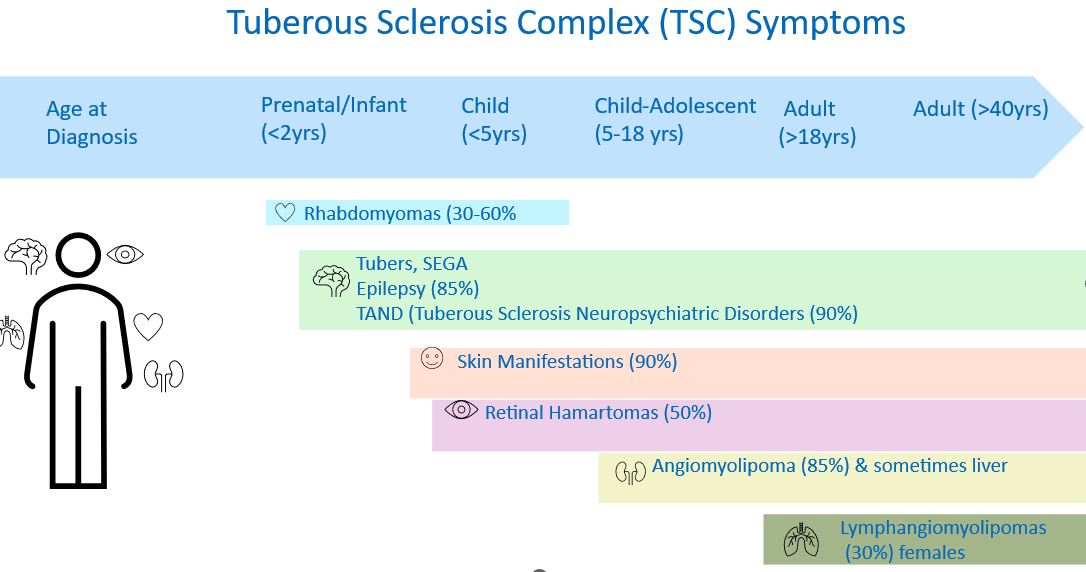
Tuberous Sclerosis Complex symptom emergence and progression Adapted from Northrup et al., 2021
Are the Tumours Cancerous?
No. The tumors resulting from TSC are not cancerous, but may still cause serious problems.
The tumours in the brain can cause epilepsy and seizures, as well as TSC- Associated Neuropsychiatric Disorders (TAND) which include behavioural, intellectual, academic, psycological, psychiatric and neuropsychological difficulties. They can also cause disruption to the flow of cerebrospinal fluid (CS F) making a child seriously ill.
The tumors in the kidney (renal angiomyolipomas) can bleed, causing haemmhorage which can be life threatening. They can also disrupt normal kidney function.
Heart tumors, called cardiac rhabdomyomas, can cause problems if they are blocking the flow of blood or cause abnormal heart rythms (arrhythmia).
Lung tumours lymphangioleimyomatosis (LAM) primarily affecting women, lead to lung destruction and breathing issues.
What are the Diagnostic Criteria and Surveillance and Management Recommendations ?
TSC diagnostic criteria and surveillance and management recommendations, updated in 2021 by a consortium of global TSC experts, provide a framework for optimal care of those living with TSC and their families.
Diagnostic Criteria
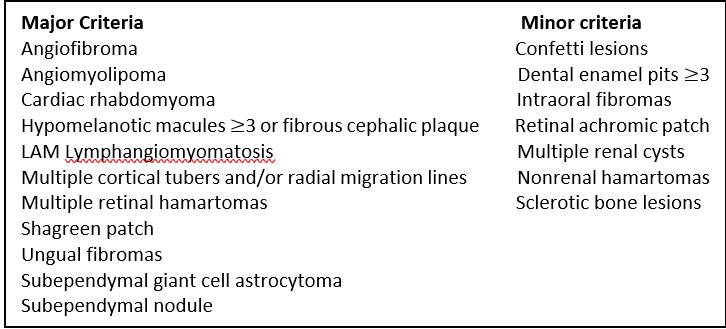
Definite TSC: Definite diagnosis of Tuberous Sclerosis Complex (TSC) requires either identifying a pathogenic varient in TSC1 or TSC 2 genes, or finding 2 major clinical features with 2 minor features.
Possible TSC: Either one major feature or > 2 minor features.**A combination of the two major clinical features LAM and angiomyolipomas without other features does not meet criteria for a Definite Diagnosis.
Surveillance and Management Recommendations
Individuals with a diagnosis of TSC require lifelong surveillance. At the time of diagnosis, many medical tests are performed and international consensus recommendations determine ongoing monitoring surveillance protocols. The following tables show surveillance screening for TSC according to the International Consensus recommendations Click here
Medication Information
There are several types of medication used in the treatment of Tuberous Sclerosis and new medications are continuously being discovered and used. It is important to stay updated and obtain accurate information form reliable sources.
Medicines.ie, is Ireland’s central, regulator approved online resource of accurate information on medicines available in the Republic of Ireland. It provides information for healthcare professionals and the public through Summary of Product Characteristics (SPCs), Patient Information Leaflets (PILs) and Educational Materials. It is owned by the Irish Pharmaceutical Healthcare Association (IPHA) and designed for easy searching and accessing crutial drug details.
Where can I find more Information about TSC?
There are excellent websites hosted by TSC organisations worldwide where you will find extensive and comprehensive information, resources and direction. We highly recommend you consult them.